A failed test after the pour costs far more than the test did. We report from the field the same day so you can fix a problem while it's still cheap.
Construction Materials Testing & Inspection in Central Florida
Same-day numbers. Certified technicians.
Soil, concrete, asphalt, and masonry testing from our own laboratory in DeLand, with CTQP-certified technicians and FDOT-approved Superpave mix designs. We test projects within about a two-hour drive of the lab, which covers most of Central and Northeast Florida.
Start Your Project
What we test, and why it matters

Soils & earthwork
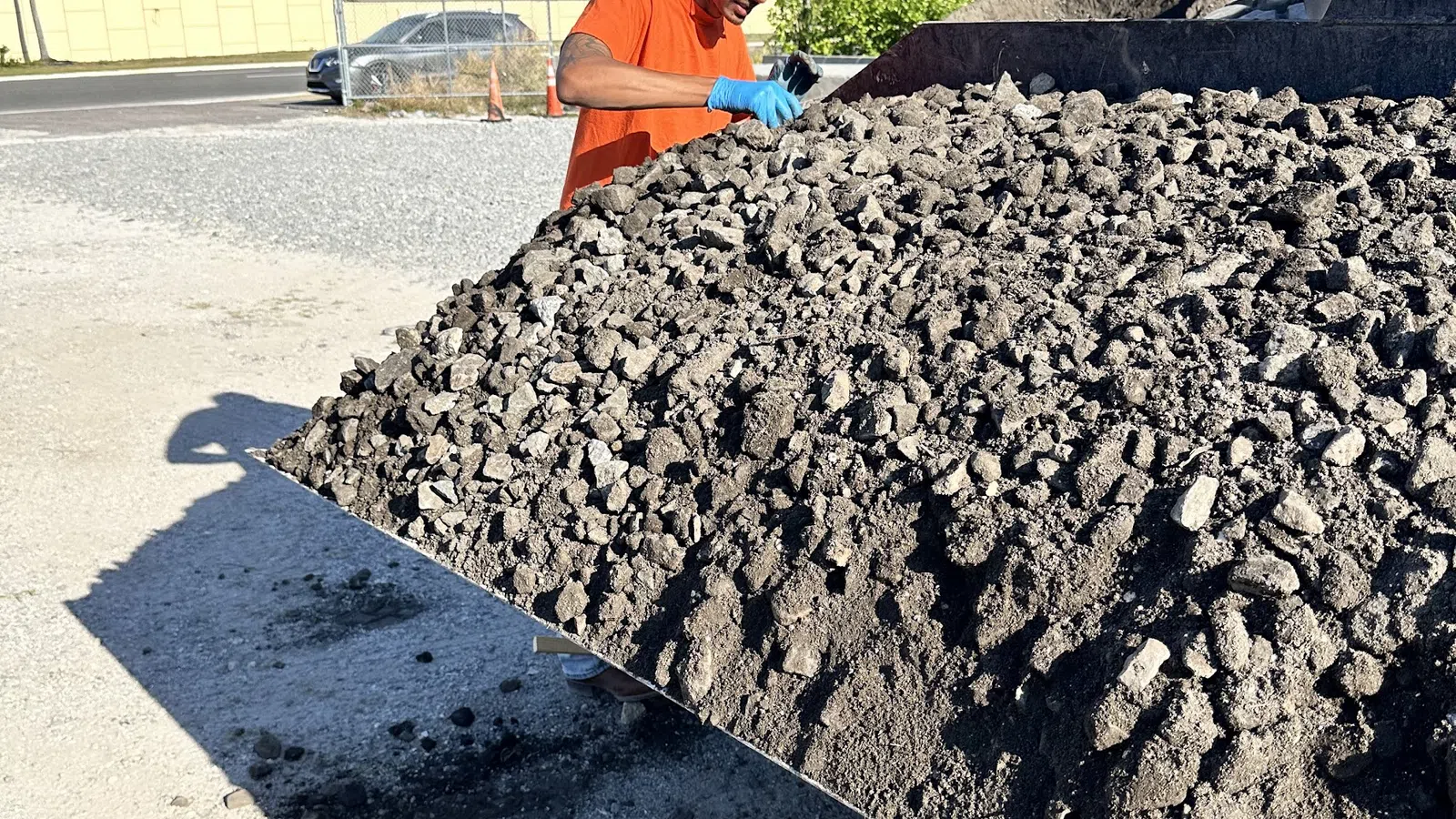
Density, compaction, Proctor, LBR, and bearing verification before anything gets built on it.
Concrete
Cylinders, slump, air content, and temperature, cast and cured to standard.
Asphalt
Density, extraction, gradation, and Superpave mix design for roadway work.
Masonry
Grout and mortar sampling, prisms, and block compressive strength.
Aggregates
Gradation, soundness, and quality testing on incoming material.
Monitoring
Vibration and settlement monitoring adjacent to sensitive structures, plus field observation of over-excavation and demucking.
Our laboratory
Same day field density reporting
Our DeLand laboratory is run by Charles "Evan" Ostler, Laboratory Manager, and the materials testing division has operated under Vice President Randy Stormant since 1992. The lab is ours, in our building in DeLand. That's why we can turn a cylinder break around without waiting in someone else's queue, and why a question about a result gets answered by the person who ran it.
FDOT quality control & assurance
Certified technicians on every FDOT test.
Public work has rules about who is allowed to run the test, not just how it's run. Our in-house laboratory is fully certified for FDOT work.
Materials testing FAQ
What is construction materials testing?
Verification that the soil, concrete, asphalt, and masonry going into your project meet spec. Technicians sample in the field, run standardized tests, and report results the contractor and building department rely on to accept the work.
How soon do I get compaction test results?
Nuclear gauge density results are available on site immediately, with a written report the same day. Lab tests like Proctors and LBR take several business days depending on method.
Why does concrete need 7-day and 28-day breaks?
The 7-day break tells you whether the mix is gaining strength on schedule. The 28-day break is the acceptance test. A low 7-day number is a warning worth acting on, not a failure.
What does CTQP certification mean?
Construction Training Qualification Program, the certification FDOT requires for technicians performing acceptance testing on state projects. Our technicians hold it.
Do you provide FDOT-approved asphalt mix designs?
Yes, along with the QC/QA testing that goes with them on roadway projects.