Engineering Services for Florida Developers and Contractors
We set the drilling date, and we keep it.
Start Your Project
Subsurface Exploration and Geotechnical Testing
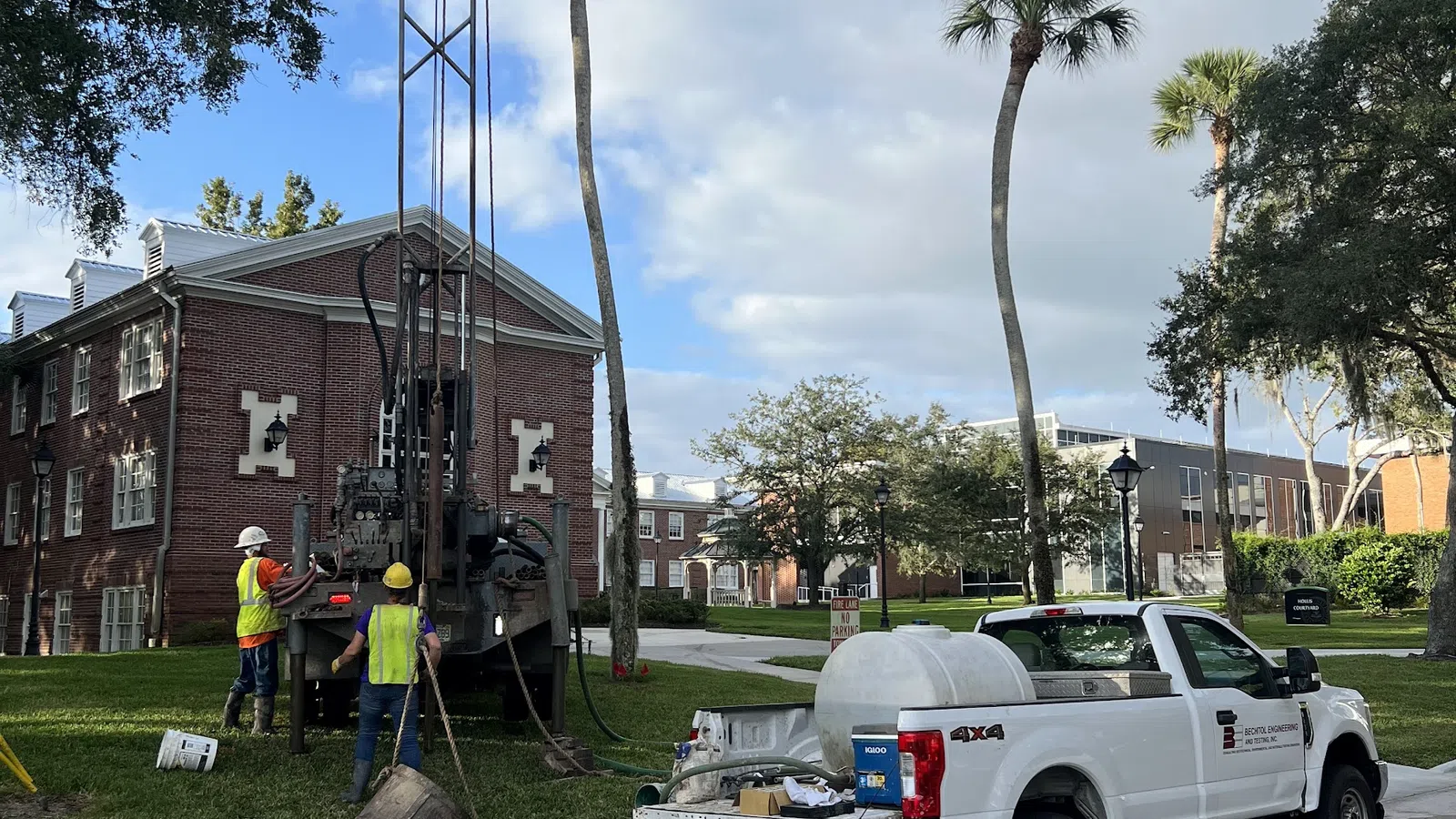
Foundation and pavement recommendations start with what is actually in the ground. Bechtol drills standard penetration test borings, recovers samples for classification, and logs groundwater at the time of drilling to give your structural Engineer data to design to.

Before design: subsurface investigation
Borings are advanced through the zone of influence beneath the proposed structure, with blow counts recorded at set intervals.
- Drilled to depths determined by proposed structural loads
- Blow counts logged at regular intervals per ASTM D1586
- Data used to establish bearing capacity and settlement estimates

Before the permit: stormwater and drainage
Water management districts want permeability rates and the seasonal high water table before they will approve a drainage design. We test them from the same borings.
- Seasonal high groundwater estimates
- Permeability and percolation testing
- Stormwater recovery analysis for retention ponds

During construction: materials testing
Once work starts, our CTQP-certified technicians test what gets built against the criteria in our own report.
- Soil compaction and density testing
- Concrete cylinders, slump, and air content
- Asphalt density and FDOT QC/QA
Difficult access
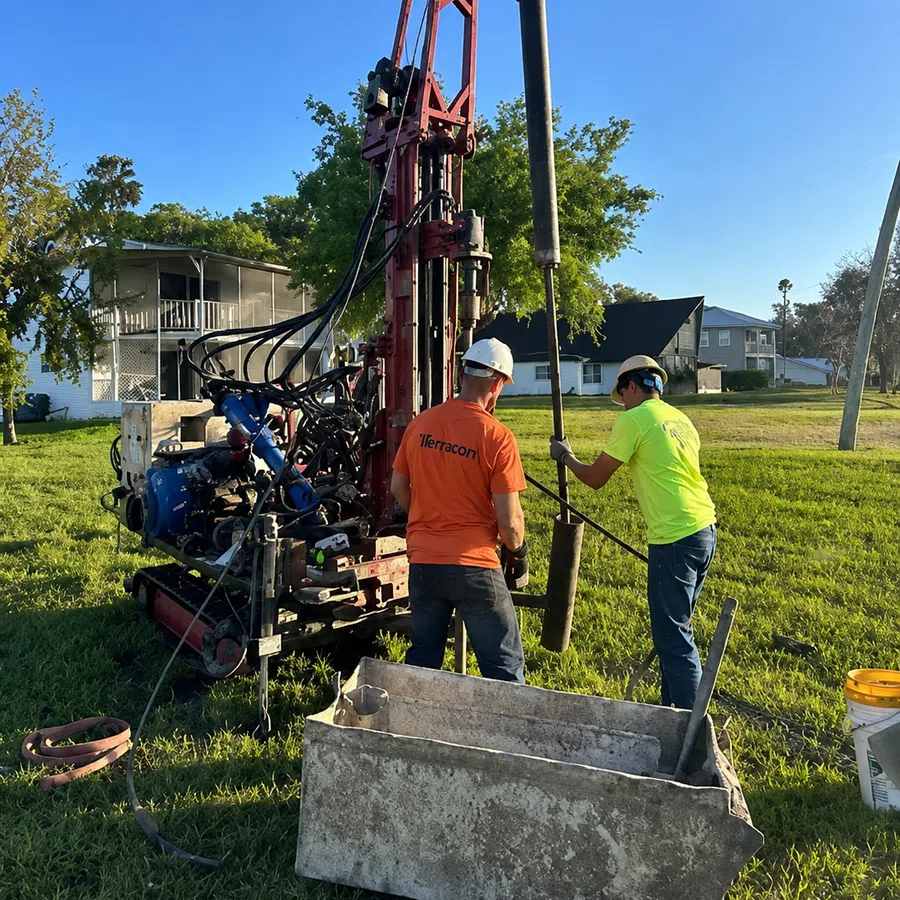
Over water, wetlands and marsh, inside existing buildings, tight residential lots, low overhead clearance, and finished surfaces that cannot be damaged. Five rig types exist so that access is a scheduling question rather than a reason to decline the job.
Problem soils
Undocumented fill, highly organic soils that need demucking, and karst features that turn up mid-project. Where a boring finds a solution cavity, the grouting program is designed and verified by the same firm, so the project does not stop while you procure a specialist.
Common questions
How fast can you get a rig on site?
Most projects mobilize within one to two weeks of authorization, often sooner in Central and Northeast Florida. Further out depends on where the rigs already are. Because we schedule them ourselves, the answer is a real date rather than an estimate. Tell us the deadline on the first call.
How quickly do compaction results come back?
Field density and compaction results are reported the same day, usually before the crew leaves the site. Concrete cylinder breaks follow the 7-day and 28-day cure schedule and are reported the day they are run.
Can you do the borings and the materials testing on the same project?
Yes, and it removes a common argument. The compaction criteria in our geotechnical report are the same criteria our testing crews verify in the field, so there is no dispute about what the specification meant.