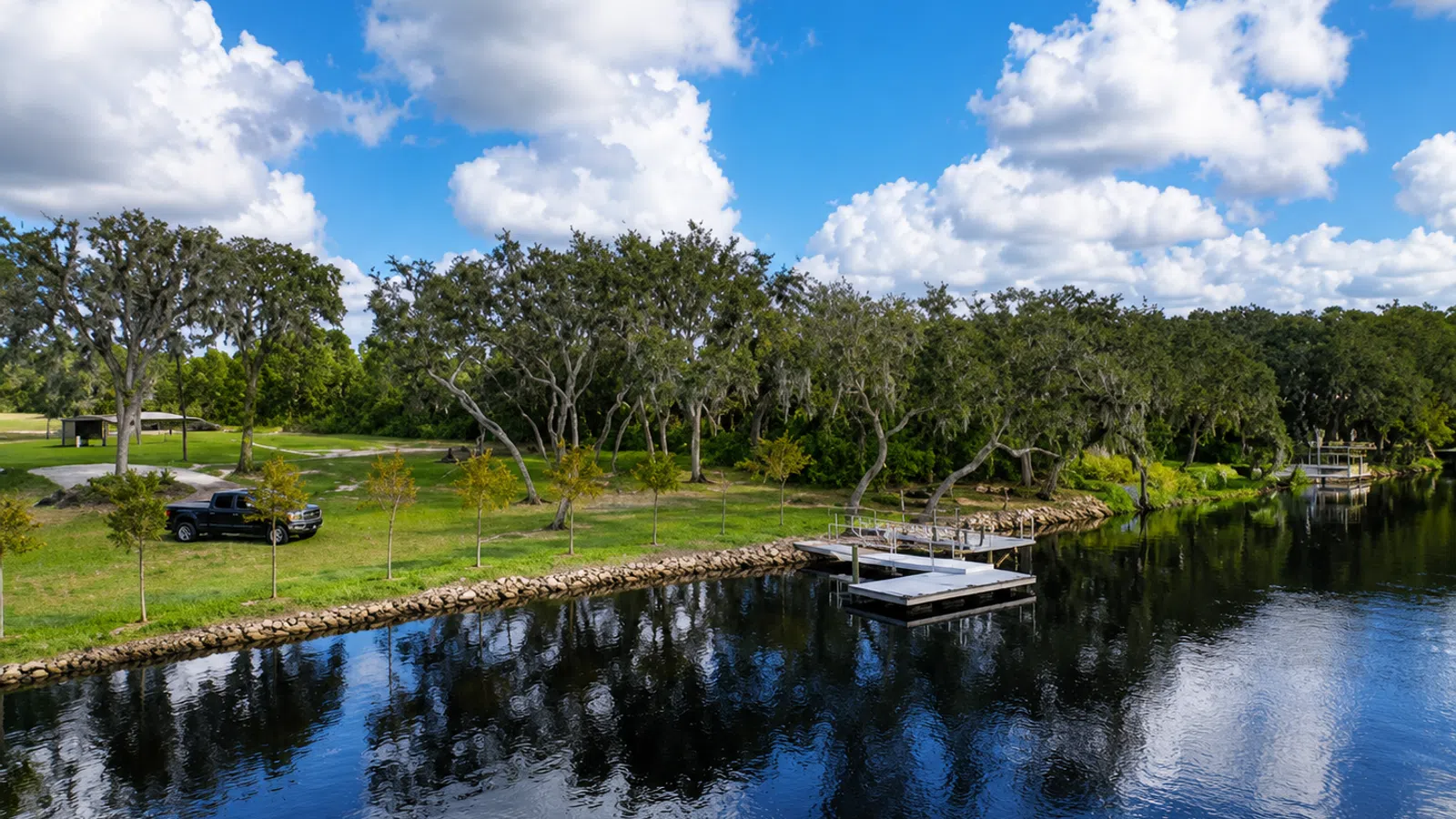
Calm river with tree-lined shore, docks, grassy banks, a parked black truck, and a bright blue sky with clouds.

Phase 1 Environmental Site Assessment in Florida

Know what you're buying before you close.

ASTM E1527-21 assessments across Florida for buyers, lenders, developers, and attorneys. Records review, site reconnaissance, and a clear finding, typically in 10 to 15 business days.

Start Your Project

What a Phase 1 ESA actually is

A Phase 1 Environmental Site Assessment is a records-and-observation investigation of a property's environmental history. It answers one question: is there reason to believe this site has been contaminated?

It is non-invasive. No drilling, no soil samples, no groundwater testing. That surprises people. A Phase 1 tells you where to look; a Phase 2 tells you what's there.

The work follows ASTM E1527-21, the current standard, and satisfies the federal All Appropriate Inquiries rule. That's what preserves your innocent landowner defense under CERCLA.

Included

Historical records, database search, site walkover, interviews, REC findings, PE review

Not included

Soil borings, groundwater sampling, laboratory analysis, remediation cost estimates

Do You Need One?

Not legally required. Practically unavoidable in most commercial transactions.
Buying Commercial Property

Establishes the innocent landowner defense. Without it you inherit liability for someone else's release.

Getting a Commercial Loan

Nearly every lender requires one before funding. SBA has its own screening thresholds by property type.

Redeveloping a Parcel

Former gas stations, dry cleaners, auto shops, and agricultural land carry known risk profiles.

Selling

A pre-listing Phase 1 stops a buyer's finding from repricing your deal at the last minute.

Refinancing

Lenders often require a new or updated assessment even on property you already own.

Estate or Partnership Transfer

Foreclosure, bankruptcy and dissolution involving real property need a defensible environmental opinion.

The Four Components

ASTM E1527-21 defines what a Phase 1 must include. Here's what each part is actually doing.

  • 01

    Historical Records Review

    Aerial photographs, Sanborn fire insurance maps, city directories, topographic maps, and title records, traced back to the property's first developed use. This is where a 1962 filling station shows up on land that's been a parking lot for forty years.

  • 02

    Regulatory Database Search

    Federal and Florida environmental databases for your parcel and every surrounding property inside ASTM search distances. Contamination migrates, so a neighbor's leaking tank can become your problem.

  • 03

    Site Reconnaissance

    A walkover documenting storage tanks, staining, drums, transformers, floor drains, wells, stressed vegetation, and evidence of past operations. Done by someone who knows what a filled-in tank pit looks like.

  • 04

    Interviews & Report

    Owners, occupants, and local officials, then a written report with findings, an opinion, and a clear recommendation on whether Phase 2 work is warranted. Reviewed and signed by a licensed Engineer.

Reading your findings

What It Means

What you do

REC

REC

Recognized Environmental Condition. A release, likely release, or material threat of one

REC

Phase 2 investigation before you close

CREC

CREC

Controlled REC. Past contamination closed out with restrictions still in place

CREC

Review the controls; they may limit your use of the site

HREC

HREC

Historical REC. Past contamination remediated to unrestricted standards

HREC

Usually no action; verify the closure documentation

De Minimis

De Minimis

Minor condition that wouldn't trigger regulatory action

De Minimis

Note it and move on

Reading your findings

What It Means

REC

Recognized Environmental Condition. A release, likely release, or material threat of one

CREC

Controlled REC. Past contamination closed out with restrictions still in place

HREC

Historical REC. Past contamination remediated to unrestricted standards

De Minimis

Minor condition that wouldn't trigger regulatory action

What you do

REC

Phase 2 investigation before you close

CREC

Review the controls; they may limit your use of the site

HREC

Usually no action; verify the closure documentation

De Minimis

Note it and move on

Everything in a Phase 1 report resolves to one of these classifications.
Cost & Timeline

01

Days 1–3

Kickoff & Ordering

Scope confirmed, database search and historical records ordered.

02

Days 4–8

Site Visit & Interviews

Walkover, photographs, owner and occupant interviews.

03

Days 9–15

Analysis & Report

Findings assembled, PE review, signed report delivered.

What Drives the Price

Parcel size, number of structures, prior use, and how deep the historical record has to go.

Expedited Delivery

Available when a closing date demands it. Tell us the date on the first call.

Bundling

Running geotechnical borings on the same parcel? One mobilization covers both.

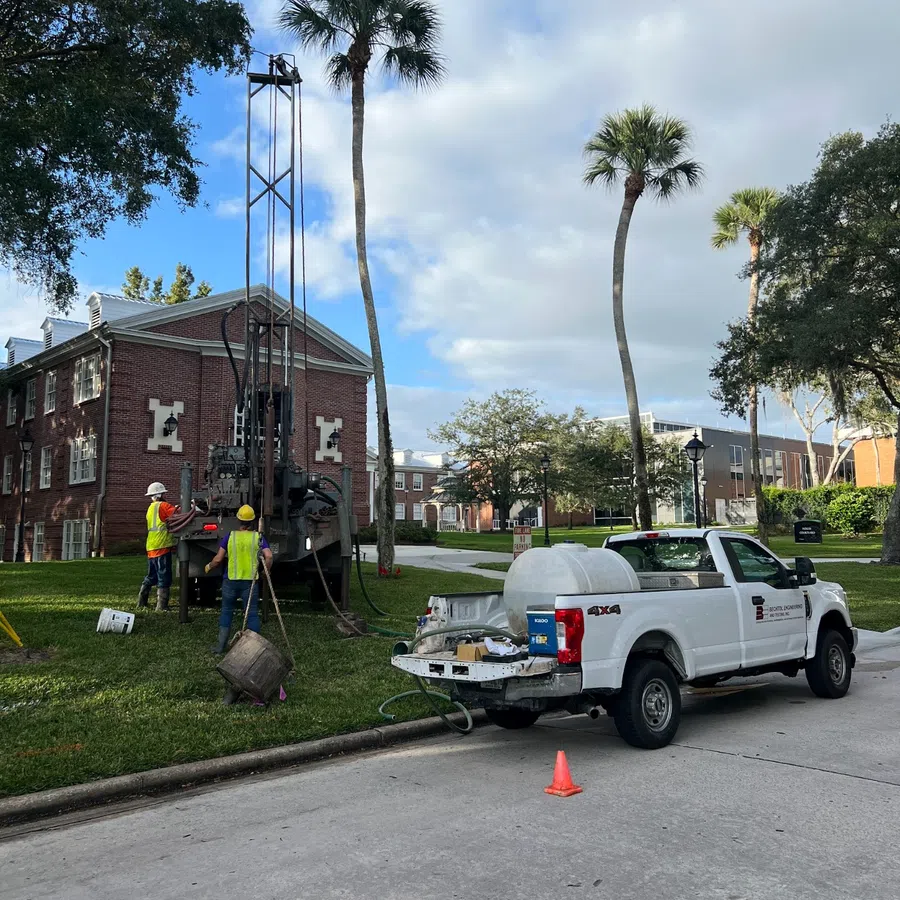
Workers in safety vests operating drilling equipment near a white utility truck on a residential street with palm trees.

If something is found

One rig, one contractor, from borings to closure.

A REC is not a dead deal. It's information you now have and the seller has to reckon with. The next step is a Phase 2 ESA: soil borings, monitoring wells, and laboratory analysis to find out what's actually there.

Because we schedule the drilling ourselves, a Phase 2 can mobilize within days. And if the results require it, we handle FDEP assessment under Rules 62-770 and 62-780 through to a No Further Action determination.

One Firm

Phase 1 through remediation, without re-bidding the work at every stage.

Phase 1 ESA Questions

What is a Phase 1 Environmental Site Assessment?

A non-invasive investigation of a property's environmental history to ASTM E1527-21, covering records review, database search, site walkover, and interviews, identifying Recognized Environmental Conditions. No sampling is performed.

How much does a Phase 1 ESA cost in Florida?

It depends on parcel size, prior use, and how much historical research the property needs. A small commercial parcel with simple history sits at the low end; a large industrial site costs more. We quote a fixed fee once we see the address and prior use.

How long does a Phase 1 ESA take?

Typically 10 to 15 business days. Database and historical records retrieval drive the schedule. Expedited delivery is available for a closing date.

Is a Phase 1 ESA required to buy commercial property?

Not by law, but nearly every commercial lender requires one, and it's the only way to establish the innocent landowner defense under CERCLA.

What is a Recognized Environmental Condition?

A REC is the presence or likely presence of hazardous substances or petroleum products due to a release, a likely release, or conditions posing a material threat of a future release. Finding RECs is the whole point of a Phase 1. See all four classifications →

How long is a Phase 1 ESA valid?

Generally 180 days under All Appropriate Inquiries, with components requiring update past that. After one year it no longer satisfies AAI.

What happens if the Phase 1 finds a problem?

A Phase 2 ESA: soil borings, monitoring wells, and lab analysis to determine what's present and at what concentration. Phase 2 ESA →