Sinkhole Evaluation & Testing in Florida
Borings tell you. Cracks do not.
A sinkhole evaluation determines whether the ground beneath a structure is actually failing and what is causing it. That usually requires standard penetration test borings drilled deep enough to reach limestone, because the source of the problem is rarely visible at the surface. The distinction matters because poor fill, decayed organics, leaking water lines, and karst activity can all cause similar cracking, but the repair, cost, and potential insurance implications depend on identifying the correct cause.
Start Your Project
Most reported sinkholes are not sinkholes
This is the part worth being direct about. Poor fill, decayed organic material, a leaking water or sewer line, and ordinary differential settlement all produce cracking that looks like karst activity to an owner, an adjuster, or a grouting a settlement problem does not fix it. Filing a sinkhole claim on a plumbing leak does not succeed. The investigation exists to tell you which conversation you are actually in.
Only subsurface investigation separates them, and the difference changes everything downstream. Compaction grouting a settlement problem does not fix it. Filing a sinkhole claim on a plumbing leak does not succeed. The investigation exists to tell you which conversation you are actually in
Compaction grouting and ground improvement
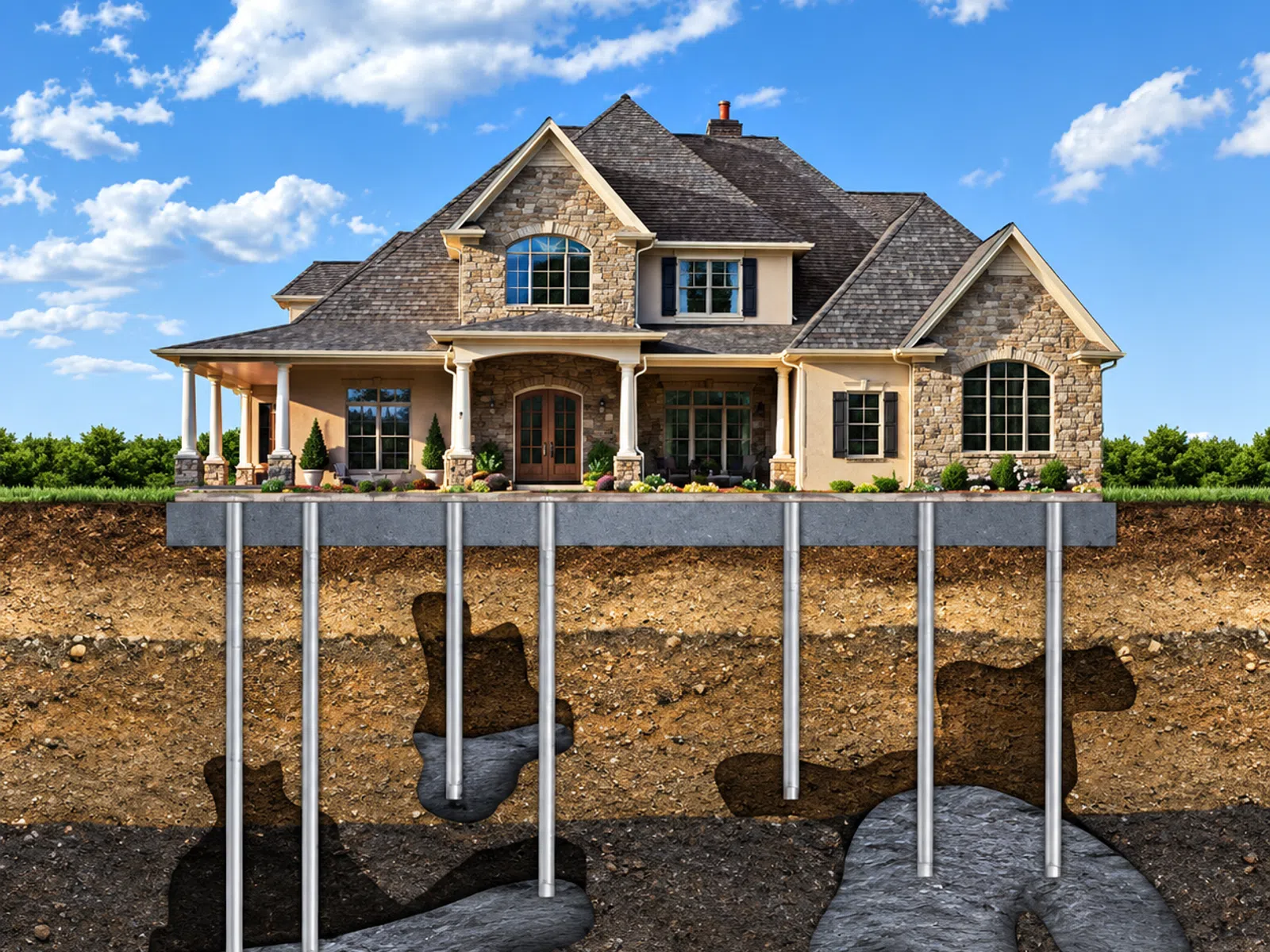
Where the investigation confirms a raveled zone or a solution cavity, compaction grouting is the usual remediation in Florida. Grout is injected under pressure at designed locations and depths, compacting the loose soil and filling the void that the soil was migrating into.
The design is the engineering: how many injection points, at what spacing, to what depth, and to what refusal criteria. We produce a grout injection point location plan as a sealed drawing, and we monitor the installation against it.
Verification borings
Grouting without verification is a hope, not a repair. After the program is complete we drill again in the treated zone and compare the blow counts against the pre-grouting data. At Wiley Nash the verification borings confirmed the loose soils had been measurably strengthened, which is what allowed the facility to move forward.
The Wiley Nash Investigation
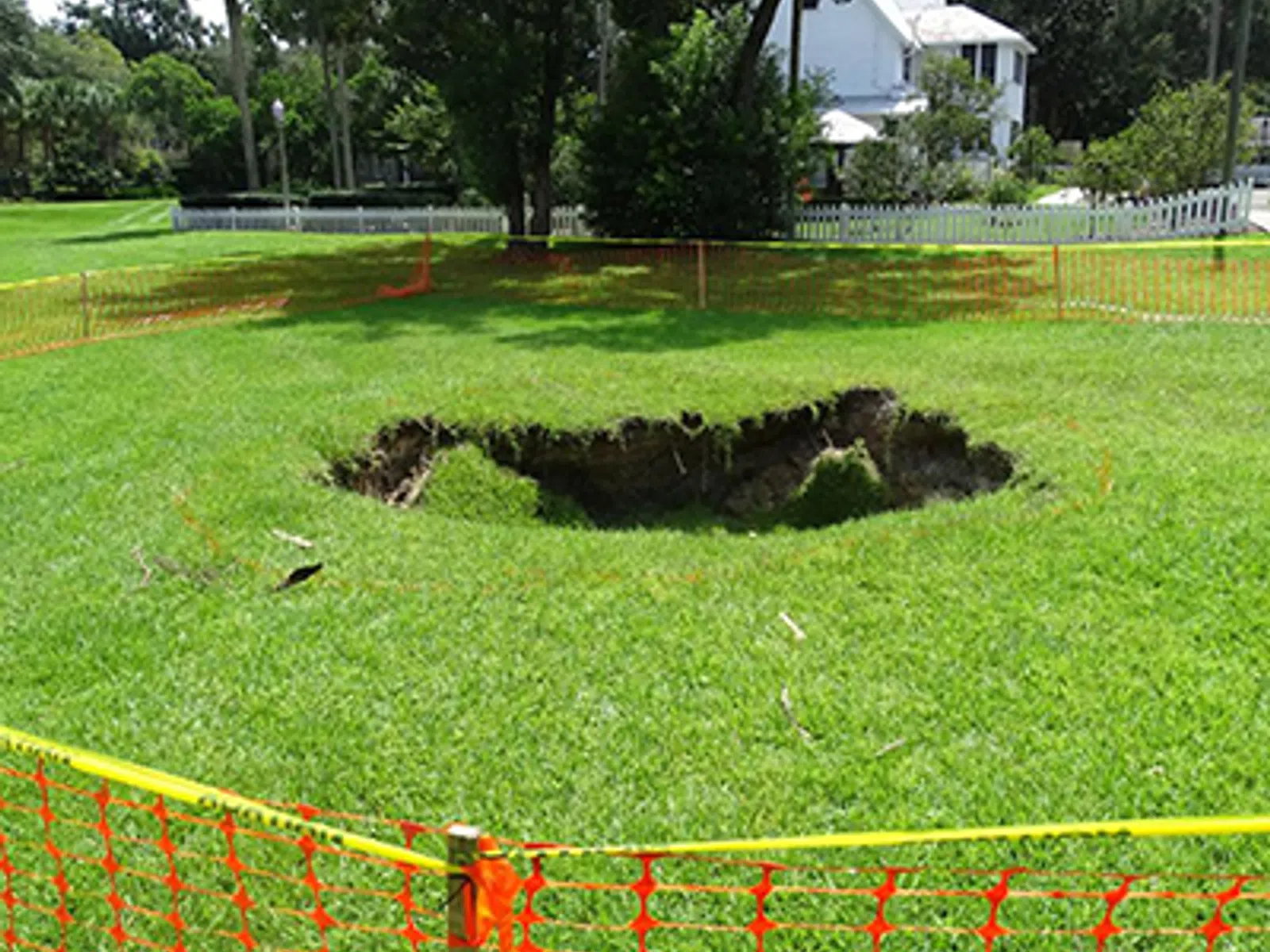
A depression opened at an active water reclamation facility in DeLand. We drilled 25 standard penetration test borings to depths between 48 and 115 feet, and the soil samples and field data revealed a solution cavity at several locations.
We recommended compaction grouting to stabilize the raveled soil zone, developed the grout location plan, and monitored the installation. Afterward we remobilized and drilled again. The results confirmed the soils showing sinkhole activity had been significantly strengthened, reducing the potential for further subsidence.
Sinkhole evaluation FAQ
How much does a sinkhole inspection cost in Florida?
It depends on how many borings the site needs and how deep they have to go, which is a function of where you are and what the structure is. A single-structure residential investigation is a very different scope from a commercial facility. Anyone quoting a firm number before seeing the site is guessing. Call us and we will scope it honestly.
Is there a way to test for sinkholes?
Yes. Standard penetration test borings are the standard method, drilled to the limestone surface with blow counts logged continuously. Ground penetrating radar and other geophysical methods can help target where to drill, but they do not replace borings. Only a boring recovers the soil and gives you the density data the analysis depends on.
Who do you call to investigate a sinkhole?
A licensed geotechnical Engineer. Not a home inspector, not a foundation repair contractor, and not an adjuster. Building departments, insurers, and courts rely on a report sealed by a professional Engineer, and the investigation requires drilling equipment and a laboratory that inspectors and contractors do not have.
Will homeowners insurance cover a sinkhole?
That depends on your policy, and we cannot tell you what yours covers because we are Engineers rather than adjusters. Florida distinguishes catastrophic ground cover collapse from sinkhole loss, and coverage differs considerably between them. What we provide is the engineering investigation and sealed report the claim process requires. Read your policy and contact your carrier early.
How long does a sinkhole evaluation take?
Field work is usually one to three days depending on the number of borings. Laboratory classification and engineering analysis follow, and the sealed report typically issues within a few weeks of completing the drilling. If you are working against a claim deadline or a closing date, tell us on the first call.
Can you fix it as well as investigate it?
Yes. We design the grouting or foundation repair program, install it through BTR Foundation Services, and issue the certification letter at the end. That means the Engineer who identified the cause is accountable for the fix. See foundation repair and helical piers.