Any one of these can be cosmetic. Several together usually aren't.
What you're probably seeing
Stair-step cracks in block or brick
Following the mortar joints diagonally, a classic differential settlement pattern.
Doors and windows sticking
Frames going out of square as the structure moves beneath them.
Sloping or bouncy floors
Measurable slope across a room, often worse toward one corner.
Separation at joints
Gaps opening where the porch, garage, or addition meets the main structure.
Ground depressions
Soft or sunken areas in the yard, especially near downspouts, a karst warning sign.
Cracks that keep growing
Movement that hasn't stabilized. Photograph and date them before you call.
Engineered, installed, and certified by one firm
The distinction shows up on the day you sell the house and someone asks for documentation.
Why the certification letter matters
When you sell, refinance, or file a claim, someone will ask for proof the repair was engineered. A letter from a licensed PE answers that. An invoice from a contractor does not.


Repair methods
The soil decides, not the sales sheet.
-
Helical piers
Screw piles to competent bearing soil, with torque-verified capacity. The workhorse for residential settlement. -
Foundation underpinning
Extending support beneath an existing footing where the original bearing has failed. -
Tieback anchors
Lateral restraint for bowing walls and earth-retaining structures. -
Compaction grouting
Injected grout densifying loose soil and filling voids, the standard response to confirmed sinkhole activity. -
Chemical grouting
Permeation grouting where soil conditions call for chemical rather than cement-based stabilization. -
Soil mixing & stabilization
Improving weak soil in place where excavation and replacement isn't practical.
An Engineer's opinion, not a free estimate
Many homeowners
reach us after three or four contractors have come out with free estimates that
don't agree, on the problem or on the price. Free estimates come from
salespeople. We don't have any.
We charge a
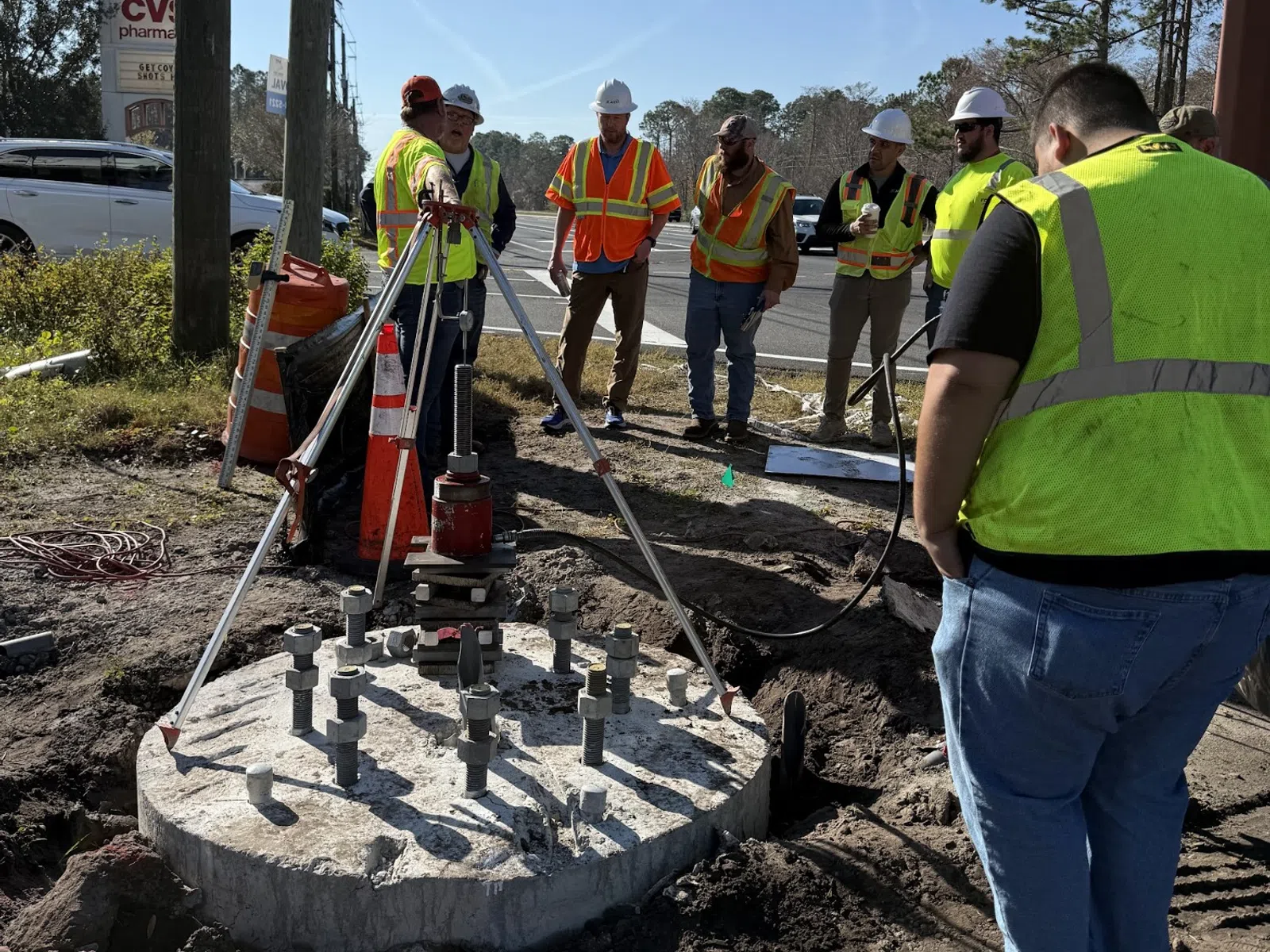
consultation fee for a licensed Engineer to come to your house. In about an
hour on site, with some lightweight testing, we find out what is going on and
tell you plainly whether your home is safe. That peace of mind is what most
people are really calling for.
If it needs a
repair, we tell you the likely range on the spot and give you a written quote
if you want one. You are welcome to shop it around. Our job first and foremost
is to help you pick the right path.
Already have
bids? Bring them. We'll tell you which approach fits what we find.
About BTR Foundation Services

BTR Foundation Services is the installation arm of Bechtol Engineering and Testing. Same company, same Engineers, operating under its own name for foundation repair work.
The arrangement exists for a practical reason. Foundation repair needs both an Engineer to design it and a crew to build it. Splitting those across two companies is where accountability gets lost. Here, the Engineer who calculated the pier layout is in the same building as the crew installing it.
Where we use helical piers and anchors
Helical piers are not only for repair.
-
Existing homes and commercial buildings
Underpinning to stop settlement and, where the structure allows, lift it back toward level. Piers carry the load past the soft or loose soil to the depth the borings show can hold it. -
Additions and new construction
Where borings show soft or organic soil, helical piles and uplift anchors can carry a new structure or an addition without deep excavation or driven piles. -
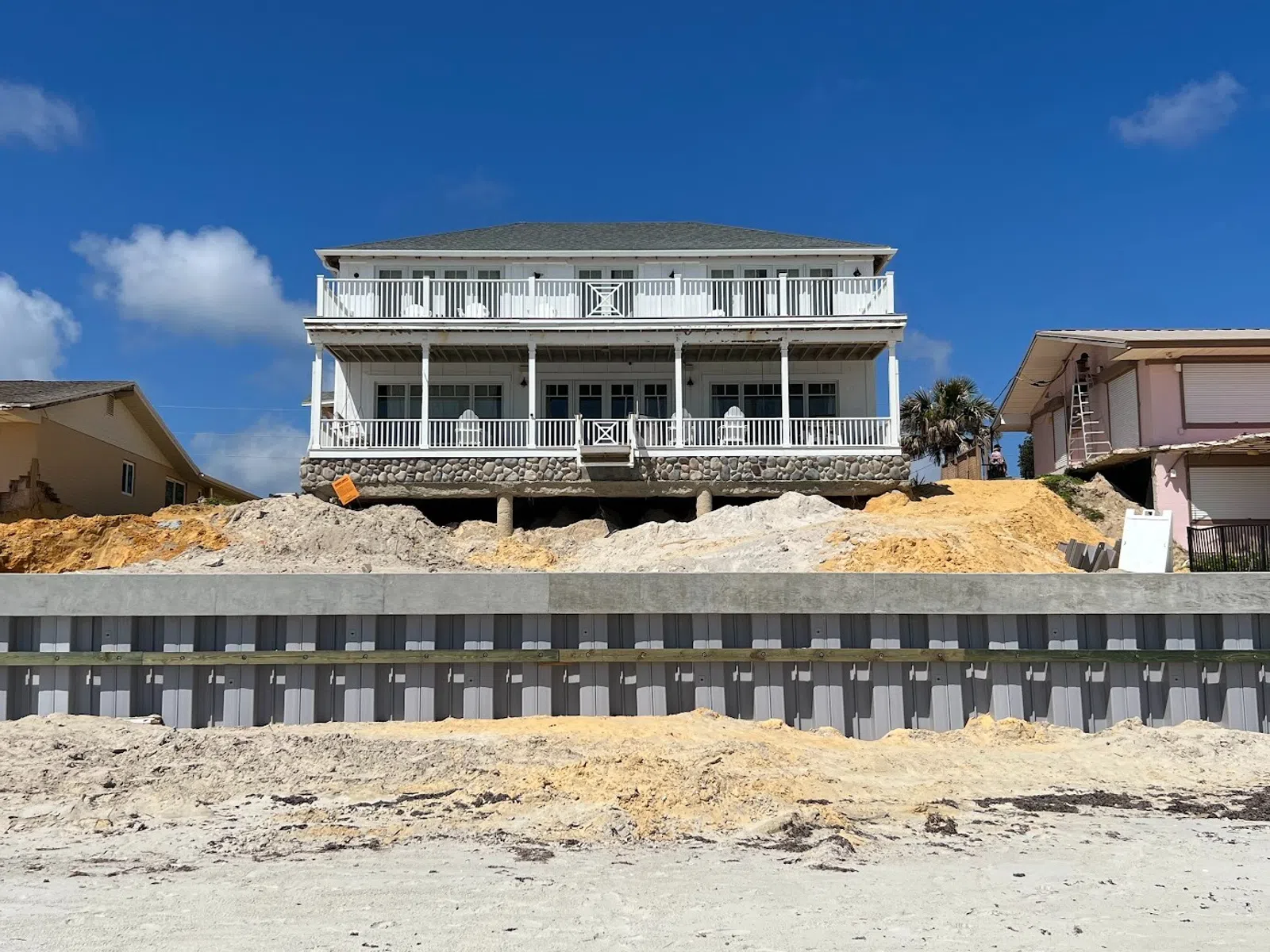
Retaining walls, seawalls, and sheet pile anchors
Soil screw retention walls and tieback tension anchors for new walls, and for existing seawalls and retaining walls that have started to lean. -
Specialty applications
Helical anchors also support light and sign bases, docks, pipelines and storage tanks, walkway supports, CATV stations, communication towers, and solar panel arrays.
Foundation repair FAQ
What is a helical pier?
A steel shaft with helix plates screwed into the ground until it reaches soil that can carry the load. Installation torque is measured continuously and correlates to capacity, so each pier is verified as it goes in.
How much does foundation repair cost in Florida?
It depends on pier count, depth to competent soil, and access around the building. Pricing follows the engineering evaluation, because pier count is a design output. Be cautious of any quote issued before someone investigates the soil.
Do I need an Engineer for foundation repair?
For most permitted repairs in Florida, yes. A licensed PE designs the repair and issues the certification letter afterward. We're an engineering firm, so design, installation, and certification come from one licensed source.
How long does helical pier installation take?
Most residential installations finish in a few days once design and permitting are complete. The equipment is compact enough for side yards and interior work.
Will insurance cover sinkhole-related damage?
It depends on your policy and whether sinkhole activity is confirmed. Insurers generally require a subsurface investigation by a licensed Engineer with borings and an opinion on cause, which is what our sinkhole evaluation produces. Sinkhole evaluation →
Do you give free estimates?
No. A licensed Engineer comes out for a paid consultation instead of a salesperson coming out for free. You get an engineering opinion on what is wrong and what it needs, and if it needs a repair, a range on the spot and a written quote you are welcome to shop around.
Can you fix a repair another company installed?
Yes. We are sometimes called to homes that are still moving after piers went in, usually because the cause was never diagnosed on site. We find out why it is still moving and design a fix that addresses it.