A geotechnical report is an engineer's written assessment of the soil and groundwater beneath a site, with recommendations for preparing the ground and designing what will be built on it. It's based on soil borings drilled on the site and laboratory testing of the samples they recover. Your structural engineer designs the foundation from it, and its compaction criteria become the standard the site work is tested against during construction.
What a Geotechnical Report Tells You
A geotechnical report answers two practical questions: can the soil support what you plan to build, and what has to happen to the ground before construction starts.
A report from our geotechnical engineering team is built on:
- The soil layers found in each boring, with laboratory classification of the samples
- Blow counts recorded at regular intervals as each boring is drilled
- The groundwater level at the time of drilling
- Bearing capacity and settlement estimates for the proposed structure
- Compaction criteria for the fill and subgrade
The boring logs are the raw data. The engineering analysis turns that data into numbers your structural engineer can design to, and into criteria your contractor has to meet in the field.
How a Geotechnical Investigation Works
The geotechnical investigation is the fieldwork and analysis. The report is what it produces. The sequence looks like this:
- A licensed engineer sets the boring locations and depths. Depth is driven by the proposed structural loads, and the number of borings is driven by the site itself, not a standard count.
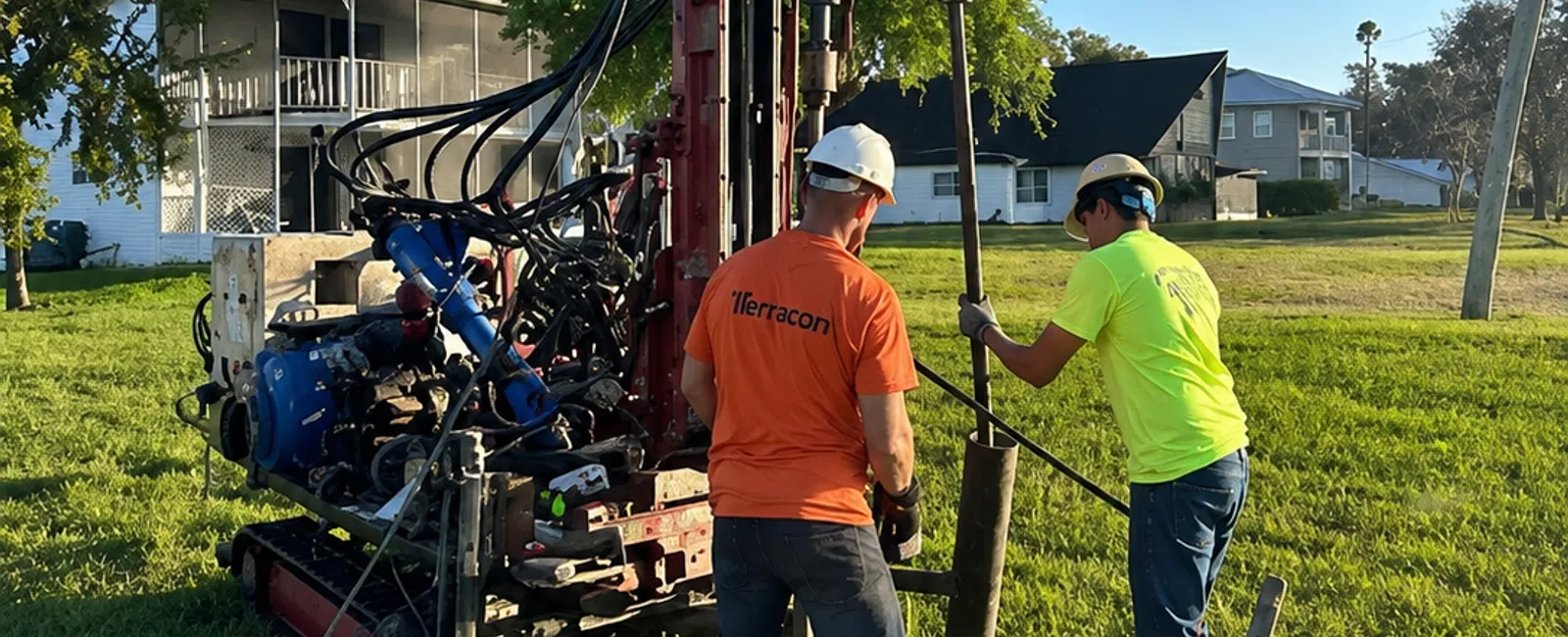
- A drill crew advances standard penetration test (SPT) borings through the zone of influence beneath the proposed structure. A hammer drives a sampler into the soil, and the crew records the blow count at set intervals following ASTM D1586. Low blow counts indicate loose or soft soil.
- Samples recovered from the borings are classified in our laboratory.
- An engineer analyzes the data and issues a report sealed by a licensed professional engineer.
If the project also needs a stormwater design, the agency reviewing it will want permeability rates and the seasonal high water table before it approves the drainage plan. We run soil permeability testing and water table measurements from the same borings, so the drainage data comes out of the same field work as the rest of your geotechnical report.
Geotechnical Report vs. Soil Report and Other Terms
You'll hear "soil report," "soils report," "geotechnical survey," and "geotechnical investigation" used for the same thing. All of them point to the borings, lab work, and engineering analysis described above.
A geotechnical report is not a land survey, which maps boundaries and elevations. It also doesn't check for contamination. That's the job of a Phase I Environmental Site Assessment, a separate study that we also perform. The two answer different questions about the same property.
What the Report Can Change About a Project
The findings that matter most are the ones that change the plan. Three problem soils do that more than most.
Undocumented fill is the first. When nobody knows what was placed on a site or how well it was compacted, the engineer can't assume it will carry a structure, and the report has to deal with it before design moves forward.
Highly organic soil is the second. It compresses under load, so when borings find it, it has to be dug out and replaced, a process called demucking. That's site work the schedule and budget need to account for. Our inspectors can also observe the over-excavation and demucking as it happens, so the work is documented against the report.
Karst is the third. Where limestone has dissolved, borings can find a solution cavity or a zone of loosened soil above one. When that happens, we design the grouting program and verify it with follow-up borings, so the project doesn't stop while you find a specialist. Our sinkhole evaluation page walks through that process.
When to Order a Geotechnical Report
Order it before the structural design is finished. The foundation design depends on the bearing capacity and settlement estimates, and redesigning around late findings costs time. If the site needs a drainage permit, getting the permeability and groundwater data from the same borings keeps the stormwater design moving at the same pace.
The report stays useful after design. Its compaction criteria are what field testing checks during construction. When the same firm writes the report and runs the construction materials testing, there's no argument over what the specification meant, because the people testing the work are checking it against their own criteria.
Who Prepares It and How Long It Takes
A geotechnical report is prepared by a licensed geotechnical engineer and carries a professional engineer's seal. Building departments and insurers rely on that seal, and it's the difference between an engineering report and an opinion.
Timing depends mostly on how many borings the site needs and how deep they have to go. We schedule our own drill rigs, and most projects mobilize within one to two weeks of authorization. With five rig types available, sites over water, in wetlands, inside existing buildings, or on tight lots are a scheduling question rather than a reason to turn the job down. If you're working against a permit or closing deadline, tell us on the first call.
Talk to an Engineer About Your Site
Send us the site details and what you plan to build. An engineer reads every request and comes back with a scope and schedule. Request a proposal to get started.